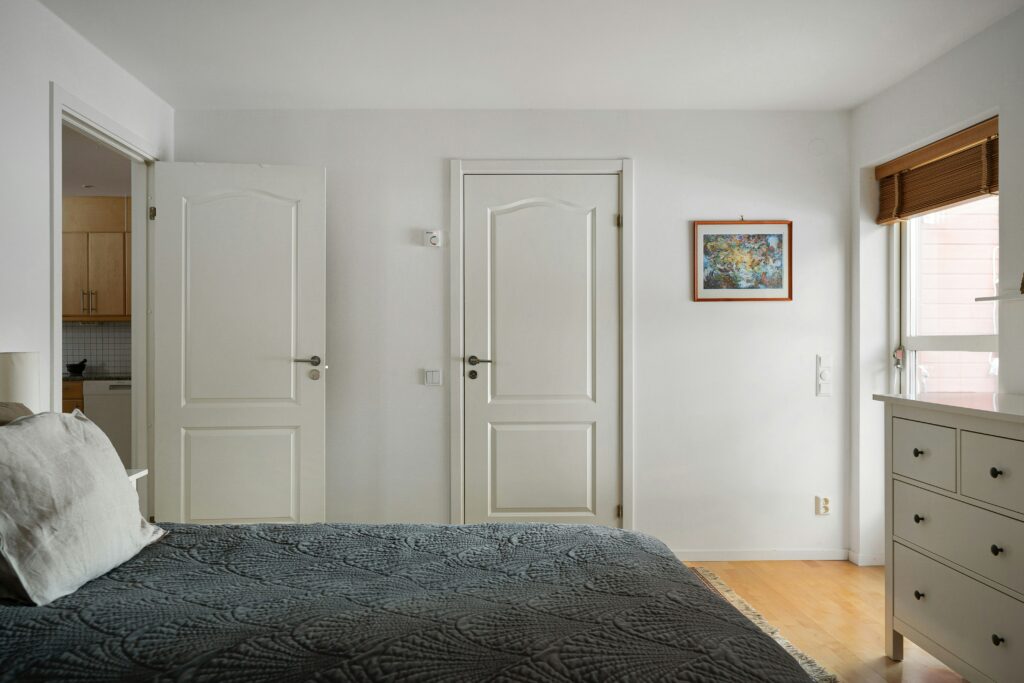
Interior Door Installation (Simple Guide)
Installing an interior door is a simple project when approached step by step, and most issues homeowners face come down to alignment, leveling, and proper hardware placement.
Before starting, measure the door opening carefully to confirm the width and height, keeping in mind that most standard interior doors are 80 inches tall. Next, choose the right door type for your project. A pre-hung door is the easiest option because it comes with the frame and hinges already attached, while a slab door is more affordable but requires more precise work, including cutting hinge placements and installing hardware.
If you’re replacing an existing door, begin by removing the old door from its hinges and carefully taking off the trim. If you’re installing a pre-hung unit, you’ll also need to remove the old frame. When installing a new pre-hung door, place it into the opening and use shims along the sides to make sure the frame is level and plumb. Once aligned, secure the frame to the studs with screws and test the door to ensure it opens and closes smoothly. For slab doors, mark and cut hinge locations, attach the hinges, hang the door, and then install the handle and latch.
After the door is installed, finish the project by reinstalling the trim, caulking any gaps, and painting or staining as needed. A properly installed interior door should open and close easily, have even spacing around all edges, and latch without resistance.
Common problems with interior doors are usually easy to fix. If a door won’t close properly, it’s often due to misalignment—tightening hinge screws, adjusting shims, or lightly sanding areas where the door rubs can solve the issue. Doors that stick are often caused by humidity or tight framing and can be fixed by sanding the problem area.
Uneven gaps typically mean the frame is not level and can be corrected by adjusting the shims and re-securing the frame. Loose hinges can be fixed by using longer screws or filling stripped holes with wood and glue. If a door swings open or closed on its own, the frame is likely out of plumb and needs adjustment at the hinge side. When the latch doesn’t line up, moving the strike plate slightly or widening the latch opening usually resolves the problem.
For best results, always check that the door frame is level throughout the installation process, use shims instead of forcing the frame into place, and test the door multiple times before completing the finish work. If you’re located in Charlotte, Cornelius, or the Lake Norman area, Monroe Quality Contractors provides professional interior door installation and repair services for residential and light commercial projects.
Quick Breakdown
• Measure the opening before buying a door
• Pre-hung doors are easier; slab doors require more precision
• Use shims to keep the frame level and straight
• Always test the door before finishing
• Most issues are caused by misalignment and are easy to fix
• Small adjustments (hinges, shims, sanding) solve most problems
• A good install = smooth swing, even gaps, easy latch